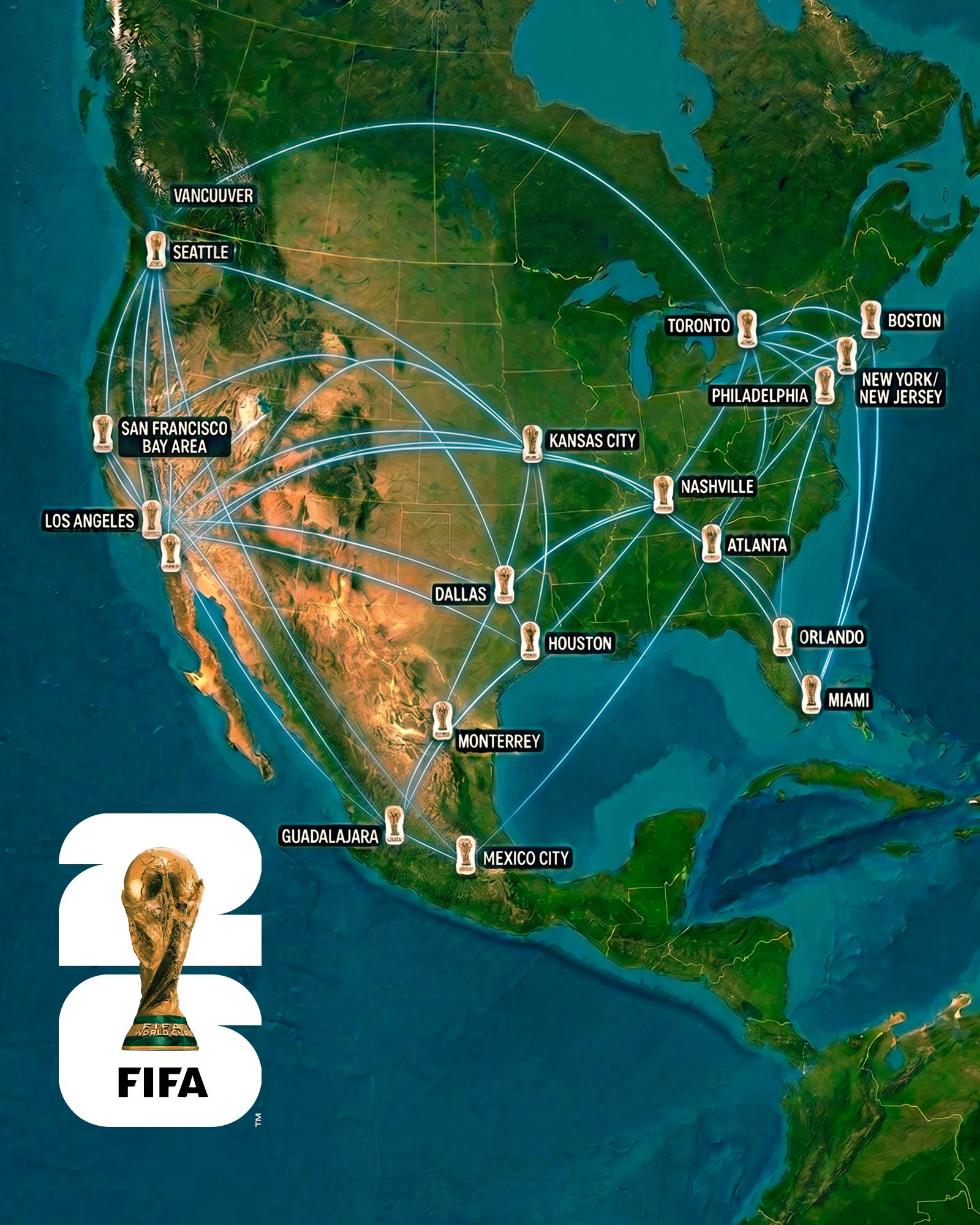
The 2026 FIFA World Cup presents coaches, players and practitioners with one of the most complex and challenging performance environments in the history of international soccer. An expanded format now includes a total of 48 teams, increasing both the duration of the tournament and the total number of games that teams are expected to play. Multiple host cities across three different countries creates extreme variations in climate, altitude and time zones, as well as significantly increasing travel demands. But perhaps the most important challenge comes from the players themselves, who during their domestic season will have been exposed to radically different workloads, fatigue accumulation, mental strains, injury incidence and load management strategies. Collectively, this means that no two players will arrive at the World Cup in the same condition.
In this two-part series, we are going to consider the multitude of challenges that practitioners face before and during the 2026 World Cup, and discuss why an Athlete Management System (AMS) such as Apollo might not just be useful, but essential. In Part 1 we looked at the numerous issues related to maintaining player availability and maximizing player readiness for the competition. Here in Part 2, we will examine the ways in which the normal complexities of tournament preparation have been amplified by the unique demands of this particular World Cup, specifically in terms of tournament duration, travel demands and environmental conditions, and we will identify the ways that teams can utilize Apollo to mitigate these performance challenges and create a competitive advantage over their opponents. Let’s begin by considering the increased scope of this year’s competition.
Challenge 4:
More Games = More Fatigue
The expanded format of the 2026 FIFA World Cup throws up a significant new challenge. By growing the tournament from 32 to 48 teams, organizers have increased the physical and mental demands that have been placed upon players, which as a consequence amplifies the need for detailed operational planning from national team staff. The tournament will now span 39 days and include 104 matches (up from 64), with teams who reach the final required to play eight games rather than the usual seven. While one additional game may appear marginal on paper, the fact is that within the environment of an elite tournament it represents a substantial increase in cumulative load, recovery demand, travel exposure, and injury risk. For practitioners, the challenge of player recovery and regeneration comes not only from accommodating the intensity of the matches (particularly in those instances where games go to extra time), but also from managing the accumulation of physical and mental stress across this extended tournament cycle.
Players will have arrived at their international camps already carrying fatigue from long domestic seasons, which will have invariably involved congested competitive schedules and extensive travel. The greater number of games featured at this World Cup has compounded that issue, increasing the likelihood of players accumulating more fatigue with limited time available for high quality recovery, thereby escalating the risk of soft tissue injuries and performance instability as the tournament progresses. Recovery windows between matches become much more valuable, whilst poor operational decisions made early in the tournament may well have amplified consequences later as the team progresses.
The increased duration of the competition also creates greater variability in player readiness across the squad. Some players tolerate repeated exposure well, while others experience progressive declines in freshness, technical skill expression, decision-making ability, or physical output. Tracking, identifying and managing these differences within the squad becomes increasingly difficult in a fast-moving tournament environment.
This is where an effective AMS such as Apollo becomes critical. By integrating training load, match exposure, wellness data, travel schedules, recovery metrics, and medical information into a single platform, practitioners gain a real-time understanding of player readiness throughout the competition. Apollo enables performance staff to identify emerging fatigue trends early, so that training and recovery strategies are entirely individualized, and decisions around rotation, substitution, and load management are made intelligently without guesswork. In a tournament where availability and freshness may ultimately determine success, the ability to centralize information and respond quickly provides teams with a major competitive advantage.
Challenge 5:
Increased Travel Can Seriously Impact Performance
The 2026 World Cup takes place in 16 cities across three host countries, with games in the United States, Canada and Mexico creating greatly increased travel distances for players and staff. However, these travel demands have not been distributed evenly. For example, France have been granted one of the more favorable schedules during the qualifying rounds, with a mere 334 miles to cover from their headquarters in Massachusetts to games located on the East coast of the US. In comparison, England’s fixture list has them commuting from their training base in Kansas to games on the outskirts of Dallas, Boston and New York, a distance of over 6000 miles. But what affect will this have on the players, and does it hand France any advantage?
The short answer is probably yes. The fact that some teams will be competing in venues which are geographically remote from their training base means that players are likely to spend a long time in the air, and aircraft are terrible environments for players to be in. Research has demonstrated that even short-haul flights increase injury risk and impede performance, and this is due to a number of factors.
Firstly, the microclimate of an aircraft cabin consists of cool, dry, recirculated air which is kept at low pressure. At cruising altitudes relative humidity is maintained at 10%-20%, much lower than in most normal environments, and this increases the need for the body to humidify the air entering the lungs. The combined effects of this dry air and low O2 pressure in aircraft cabins can result in players experiencing a faster rate of fluid loss (up from 160mL/hour to 360 mL/hour) which leads to higher levels of dehydration. As little as 2% dehydration has been shown to have significant consequences on performance.
A second factor is that air travel requires players to remain seated and immobile for extended periods of time, which causes muscle and connective tissues to shorten and stiffen, with obvious negative effects on mobility and flexibility. Prolonged sitting can also trigger fluid to shift towards the lower extremities. This fluid shift increases the viscosity of the blood, making it harder to pump around the body and inhibiting the delivery of oxygen to the working muscles. Because of this, the players physical capacity can be seriously compromised when they arrive at the game venue.
A third important issue is that oxygen saturation in the cabin is significantly lower: 93% at cruising altitude compared to 97% at ground level. This hypoxic environment has the effect of slowing muscle recovery which will impede the post-game regeneration process as players return to their training base. And as we have already identified, the expanded format of this World Cup means that player recovery and regeneration is a critical factor for success.
With teams facing vastly different travel schedules and recovery windows, national teams cannot afford to treat flights as a purely logistical issue. Practitioners need the ability to monitor the cumulative physiological cost of travel in real time, and this is where Apollo comes into its own. By integrating travel schedules, flight duration, time-zone changes, hydration markers, wellness questionnaires, sleep data, and training load into a centralized platform, Apollo allows staff to understand how each player is responding to travel stress across the tournament. This visibility enables practitioners to make informed adjustments to factors including training intensity, recovery protocols, nutrition strategies, and match preparation positioned in and around travel events. Players experiencing elevated markers of travel-related fatigue can be identified early, before these markers translate into bigger performance issues. Crucially, because no two players will respond to multiple flights in the same way, Apollo can facilitate individualized travel regeneration strategies based on each player’s bespoke recovery profile. In a tournament where recovery time is compressed and cumulative fatigue can quickly destabilize performance; Apollo helps transform travel from an uncontrollable disruption into a manageable performance variable.
Challenge 6:
Games Occur in Different Time Zone Changes
A further mechanism through which travel can significantly impair soccer performance is via the de-synchronization which is created between the game venue and the player’s circadian rhythm.
The circadian rhythm is the body’s internal biological clock, and is responsible for regulating functions such as sleeping, eating, hormone production, mood and energy levels at different points over a 24-hour period, and as such it plays a critical role in soccer performance. The rhythm dictates that the window for optimal performance is between approximately 2:30pm and 6:00pm, when core body temperature is at its highest. However, moving across time zones causes the circadian rhythm to shift out of harmony with the local environment, and this can significantly compromise sporting ability. It takes approximately 24 hours per time-zone crossed for a player to adapt to the new local time, and the greater the number of time zones travelled, the longer this adaptation process takes.
A good example of a team who may who may be affected by time zone variation in this year’s World Cup can be found when we look at the playing schedule handed to Canada. They play their first game in Toronto and must then take a 5 hour, 2090-mile flight to their second game venue in Vancouver, a location which is three hours behind, with the match scheduled to take place six days later. This should give the players enough time to adapt between games, but how will it affect their training and game preparation in the days leading up? This three-hour time shift between game venues could cause the players to experience significant circadian de-synchronization and increase the magnitude of travel fatigue, so what can practitioners do to mitigate this challenge?
Again, by integrating travel schedules, sleep monitoring, wellness questionnaires, training loads, and recovery metrics into a single report, Apollo allows practitioners to identify how individual players are responding to travel-related fatigue and circadian de-synchronization. This enables staff to make evidence-based adjustments to training times, recovery sessions, meal scheduling, and sleep strategies in order to accelerate adaptation to local time zones. Crucially, Apollo helps practitioners recognize that circadian disruption affects players differently depending on factors such as playing time, accumulated fatigue and individual sleep patterns. Rather than applying a uniform approach across the squad, teams can individualize interventions for players who may be struggling with sleep disruption, reduced readiness, or elevated fatigue following travel. In a tournament where matches may be decided by factors such as focus, concentration, decision-making and the ability to produce high-intensity actions repeatedly, the ability to monitor and manage circadian stress becomes a significant performance variable. Apollo provides the data coordination required to turn complex travel and recovery metrics into practical interventions that help maintain freshness and performance stability throughout the tournament.
Challenge 7:
The Tournament Schedule Creates Sleep Disruption
We have established that the game schedule of this World Cup creates travel demands which have a disruptive effect on the player’s circadian rhythm, and a major consequence which emerges out of that is an erosion of high-quality sleep. Numerous components of soccer performance are supported by players experiencing a sufficient amount of beneficial sleep, which is needed to restore energy reserves, repair damaged muscle tissue, and maintain high levels of motivation and concentration. Even partial sleep deprivation can have significant negative effects on performance and recovery, with factors such as metabolism, inflammation, hormone release, muscle regeneration, cognitive function, the immune system and risk of injury all being adversely affected. A number of studies have shown that disrupted sleep can worsen measurable factors of performance, including:
- A decline in average and total sprint performance
- A decline in technical skill accuracy
- Quicker time to exhaustion
- Slower reaction times
- Increased injury rates
- Increased risk of illness
Apollo can play a critical role in protecting sleep quality and managing the downstream performance risks associated with travel fatigue during the 2026 World Cup because it allows practitioners to identify the early signs of sleep disruption before they begin to effect on-field performance. Declines in sleep duration or quality can immediately be contextualized alongside changes in sprint performance, reaction time, perceived fatigue, or injury risk, enabling staff to intervene proactively rather than reactively. The level of insight which is delivered by Apollo allows teams to then implement targeted evidence-based interventions for players who are experiencing poor sleep following travel or late-evening matches.
Challenge 8:
Climatic Conditions Expose Players to Extreme Environmental Stress
As if the increased number of games and greater travel demands at this World Cup weren’t problematic enough, perhaps the greatest challenge posed to players and staff is coping with the environmental conditions that some of the games will be played under.
The first of these is temperature. Venues in Mexico and the Southern US are likely to experience extreme heat and humidity, with temperatures that could exceed 30°C-40°C (86°F-104°F). A large number of games are scheduled to take place during the hottest part of the day, with a report by climate research group World Weather Attribution claiming that roughly a quarter of the 104 matches at this year’s World Cup are likely to be played in conditions exceeding safety limits recommended by FIFPRO.
The second issue is altitude. Matches held in Mexico City and Guadalajara, which are 2,240m and 1,566m above sea level, create serious altitude related performance issues as they require players to cope with reduced oxygen saturation levels, which in turn leads to faster muscle acidity and slower recovery between high-intensity actions. Consequently, teams may need to adopt a lower intensity tactical model which incorporates less high-speed running and fewer sprints in order to manage expectations associated with player fatigue. In addition to this, teams who are unaccustomed to playing at these high altitudes may well find themselves at a disadvantage compared to teams or players more familiar with those conditions. For example, if England progress to the Round of 16 they are likely to play against Mexico in Mexico City, a team who will be well acclimatized to playing at high altitude.
Acclimatization rates and environmental tolerance are highly individualistic, and vary significantly between players. However, by monitoring and integrating multiple identified markers of player response to heat and altitude exposure, Apollo supports the preparation strategies of national teams to these environmental stressors. Training intensity, recovery protocols, hydration plans, and team preparation can all be adjusted on a player-by-player basis, with the crucial factor being that Apollo facilitates better communication between coaching, medical, and performance departments, ensuring that tactical decisions align with the players’ physiological status. For example, teams may choose to reduce pressing intensity, modify sprint exposure, or alter substitution patterns in high-altitude or extreme heat environments in order to preserve freshness and increase the probability of winning. In a World Cup where environmental conditions may create major competitive advantages or disadvantages between teams, Apollo provides the integrated oversight needed to manage these stressors proactively.
The 2026 World Cup Raises Major Challenges: Apollo Provides Solutions
The 2026 FIFA World Cup presents coaches, players and practitioners with one of the most complex and challenging performance environments in the history of international soccer. Teams will have to deal with extreme travel distances, shifting time zones, and a wide range of environmental conditions. One match might be played at altitude, the next in extreme heat and humidity. The schedules are relentless and the recovery windows tight, all of which culminates in an increased performance cost that must be paid by each player.
The important point is that none of these factors exist in isolation: coaches might set the tactical gameplan, performance staff will manage the load, medical teams will monitor injury risk, and operations may handle travel and logistics, but every decision taken by each one of these departments will reverberate throughout the entire group and affect everything else downstream. A poorly timed flight will compromise recovery, an unexpectedly heavy training session can increase fatigue, and a different tactical approach to accommodate the impact of playing in extreme heat or at altitude will change physical demands entirely. When different departments operate in isolation problems quickly emerge, but when they become aligned performance thrives. For that reason, practitioners cannot afford to only look at surface level metrics, but must analyze the ways in which everything is integrated and connected. This is the point where Apollo mitigates performance challenges and delivers a serious competitive advantage.
Instead of fragmented information, with Apollo everything sits in one place, meaning that training data, medical insights, player feedback, travel schedules and environmental context are all connected. Coaches can see not just what a player has done, but what the cost to that player was, and this level of insight changes how decisions are made because it allows staff to understand trends, identify risks early, and adjust plans quickly and effectively. Preparation for the 2026 World Cup is therefore less about eliminating challenges, and more about managing them intelligently. The teams that succeed will not be the ones with the most data, but the ones who are best able to use it by integrating coaching, performance, medical, nutrition, psychological, environmental, and operational considerations into a unified strategy. In this environment, Apollo is no longer a mere support tool, but is instead a central component of performance strategy. By enabling clarity, alignment, and adaptability, Apollo provides national teams with the structure they need to navigate the complexity of the World Cup and make winning decisions.
Written by Adrian Lamb, Apollo Sports Scientist
To learn more about how Apollo’s Executive Dashboard can make a difference to you, email info@apollov2.com.